
Indiana Arrest Records and Charges
Indiana arrest records begin with police and booking activity. An agency can record probable cause, identifiers, fingerprints, a photo, property, the booking number, initial allegations, and release or hold data. Those facts document custody. They do not show that a prosecutor filed a court case. A prosecutor may decline the matter, seek more investigation, file an information, or ask a grand jury for an indictment.
When filing occurs, the Clerk of the Circuit Court opens the cause and Chronological Case Summary. The court charge record then shows the formal counts and later changes. Booking details remain with the sheriff or jail, while the filed information and final judgment belong to the court file. The Indiana inmate records resource covers current custody and county roster channels; the court record supplies the legal path after filing.
Find Indiana Arrest Records and Charges
Use more than one channel because no single public system holds the full pathway. Search MyCase for a filed case by cause number or party name. Then identify the filing court and read each count's description, Indiana Code citation, level, amendment, status, disposition, and sentence. Ask the county clerk for the filed information or indictment and final judgment when accuracy matters. For booking and release data, contact the arresting agency or county sheriff.
- Record the arresting agency, booking date, booking number, and initial allegations without calling them filed charges.
- Search MyCase by cause number, then try name variants and birth date if the number is unknown.
- Open the cause and record every count's original or amended label, statute, severity, and filing date.
- Read later CCS entries for dismissal, plea, verdict, judgment, sentence, appeal, or expungement.
- Order the key documents from the filing clerk and compare them with any ISP history response.
If MyCase has no result, check the court's Odyssey go-live date and use the Indiana county directory for legacy files. A prosecutor's decision not to file may leave an agency or prosecutor record but no court cause. Describe that no-result carefully rather than inventing a court disposition.
Indiana Charging Documents Explained
A charging instrument identifies the legal allegations that enter court. It is distinct from the probable-cause affidavit, which supports an arrest or judicial finding and may contain a contested officer narrative. Indiana commonly uses a prosecutor's information for felony and misdemeanor prosecution. An indictment follows secret grand-jury proceedings. A sworn complaint or uniform ticket can initiate designated matters.
| Complaint | Information | Indictment | |
|---|---|---|---|
| Source | Sworn complainant or uniform ticket process | Prosecuting attorney | Grand jury |
| Indiana use | Infractions and designated offenses | Common felony and misdemeanor charging document | Formal accusation after grand-jury action |
| What it proves | Allegation only | Allegation only | Allegation only |
| Access caution | Supporting material may be restricted | May later be amended | Grand-jury testimony and deliberations remain secret |
An amendment can change the offense, count, or level within procedural limits. Always pair the charging document with the newest count table and final judgment.
Indiana Court Charge Status
Charge status can change several times. Preserve the exact term and date instead of reducing the whole file to open or closed. One Indiana arrest can lead to several counts with different outcomes, and a later order can alter an earlier result.
- Arrested or booked
- A custody event that does not show a court charge was filed.
- Pending or filed
- A formal allegation awaits final disposition.
- Amended or reduced
- The prosecutor changed the filed count under applicable procedure.
- Dismissed
- The count ended without conviction; reason and with-prejudice language can matter.
- Acquitted or not guilty
- The factfinder did not convict on that count.
- Guilty plea or finding
- Guilt was admitted or found, subject to entered judgment and later review.
- Diversion or deferral
- A conditional local process whose effect depends on agreement and order.
Declined or refused is different again: the prosecutor did not file, so the outcome may exist only in agency or prosecutor records rather than as a MyCase disposition.
Indiana Charges Versus Convictions
Neither an arrest nor a filed charge is a finding of guilt. The information or indictment identifies what the state alleged. The judgment identifies what was admitted or proved. A public Indiana court charge record can continue to show dismissed or acquitted counts unless later restricted, so every reported count needs its current status.
| Charge | Conviction | |
|---|---|---|
| Meaning | Formal accusation | Entered judgment of guilt |
| Source | Information, indictment, complaint, or current count table | Verdict or plea plus judgment |
| Change | Can be amended, reduced, or dismissed | Can be appealed, modified, or expunged if eligible |
| Safe description | Alleged offense with exact status | Exact convicted count and current disposition |
When counts differ, describe them one by one. A case-level closed label cannot replace the judgment entered for each allegation.
Indiana Sealed Versus Expunged Charges
Indiana Code 35-38-9 separates arrest or charge histories without conviction from misdemeanor, Level 6 felony, and more serious conviction categories. Waiting periods, offense exclusions, conditions, filing location, and prosecutor consent can differ. Relief is not an instant deletion service. The certified order controls what is restricted and which agencies must update.
| Sealed | Expunged | |
|---|---|---|
| Public view | Restricted under rule, law, or order | Restricted according to the IC 35-38-9 order |
| Physical record | May remain in protected form | Not necessarily destroyed in every repository |
| Justice access | Authorized access may remain | Specified lawful access and use may remain |
| Verification | Read the sealing order | Check the certified order, MyCase, and ISP after processing |
A clerk corrects the court file. Indiana State Police corrects its repository. An arresting agency may need its own copy of the order, and a private copy can require a separate dispute.
Decode Indiana Court Charges
Indiana felony levels run from Level 1 through Level 6, with Level 1 the most serious; murder is its own category. Misdemeanors use Classes A, B, and C, with A most serious. Infractions are civil violations, even though law enforcement and courts process them. A case can contain counts at several levels and outcomes. Record the count number, exact offense label, Indiana Code section, original or amended status, and final disposition.
A cause type such as F6 says that the case opened in the Level 6 felony classification. It does not prove a Level 6 conviction. The count may later be amended to a Class A misdemeanor, dismissed, or resolved through another count. Link legal descriptions to the current Indiana Code, while remembering that the law on the event date can differ from today's text.
The current Indiana Code source is shown in the assigned image below.
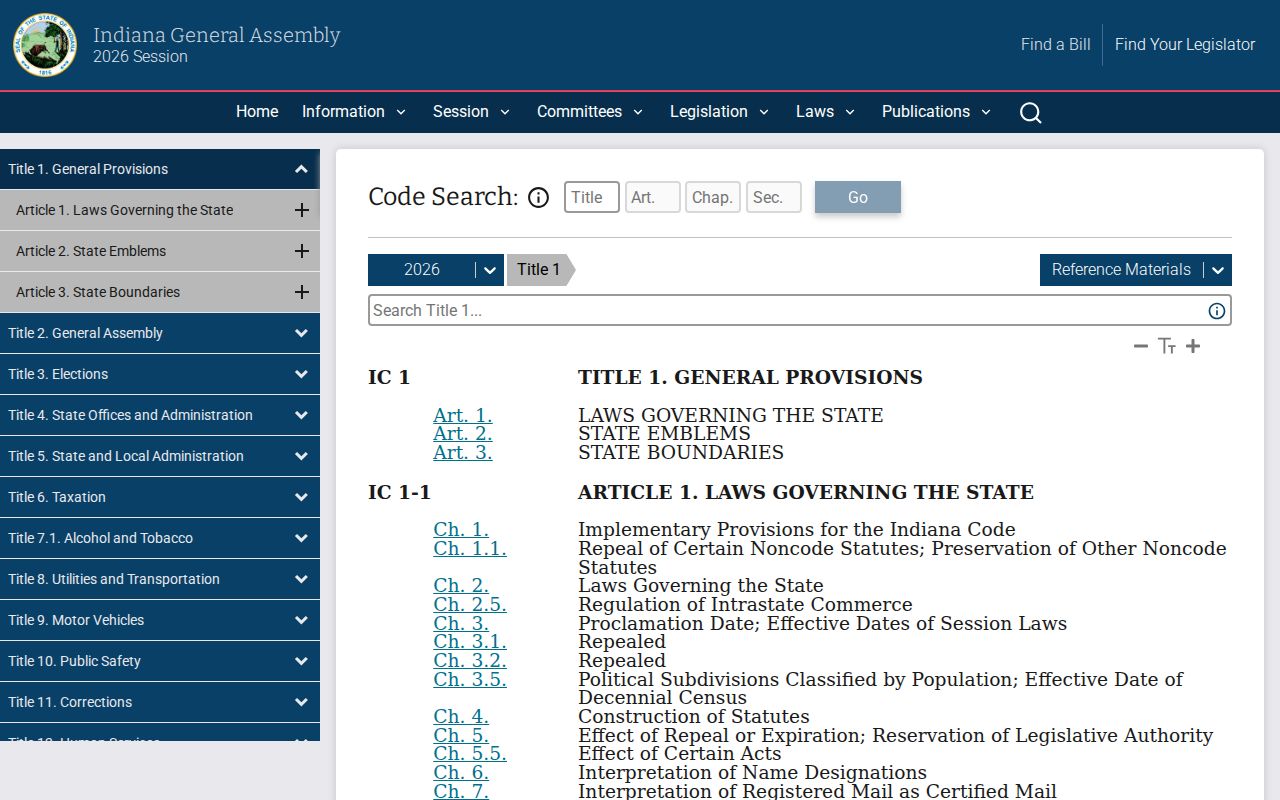
The official code supplies the statute text, while the court judgment supplies the actual result for the person and count.
Indiana Statewide Charge History
The Indiana State Police Limited Criminal History is a paid, name-based repository search for reported Indiana felony and misdemeanor arrests and dispositions. Completeness depends on county and agency participation. It is not national, and it is not the full set of documents from a county case. Its result categories are On File, Inconclusive Results, and No Records Found. Each must be interpreted within the limited product.
Search inputs include legal name, birth date, race, gender, and additional identifying data if needed. Current price should be verified in the live service or mail form. ISP also provides an authorized fingerprint-based National Full Criminal History path where a more complete product is required. If an ISP response lacks a disposition, obtain the county court's certified judgment and use the ISP correction process.
The official Indiana State Police contact routes are depicted in this assigned image.
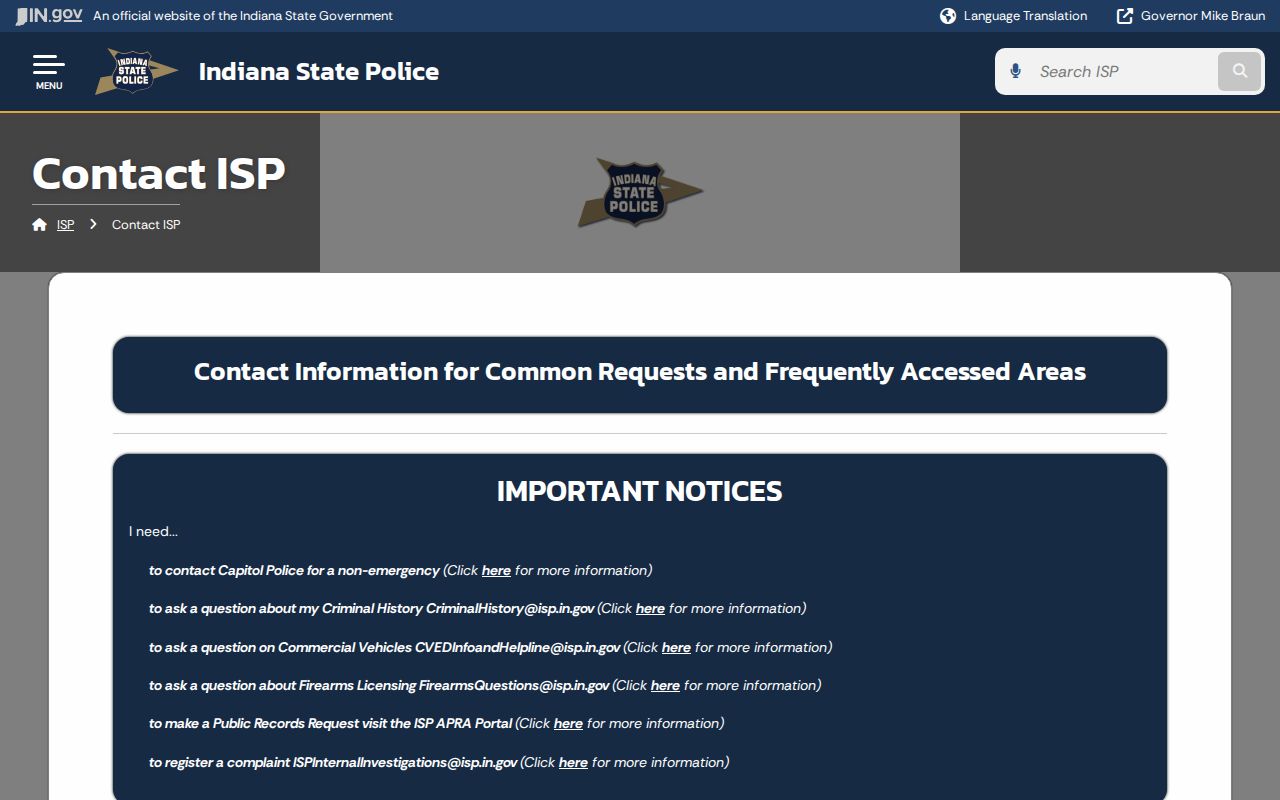
Those channels help route a repository question, but the filing clerk remains the source for the charging paper and judgment.
Indiana Arrest Record Accuracy
Cross-system verification prevents serious errors. Record the arrest date, prosecutor filing date, amendment date, disposition date, and sentence date separately. Also keep the arresting agency, booking number, court cause number, and ISP transaction reference. Match more than a name. Middle name, secure birth-date search, court, offense date, and counsel can distinguish people without publishing sensitive identifiers.
A consumer report used for employment, housing, credit, or another regulated decision can trigger Fair Credit Reporting Act duties involving purpose, authorization, accuracy, and adverse action. A homemade MyCase compilation is not the same as an authorized background product. Ask the recipient which ISP or fingerprint product it requires before paying.
Important: A same-name arrest result cannot establish identity, and an original booking allegation cannot establish the final court outcome.
Restricted Indiana Charge Records
Juvenile court and law-enforcement records have category-specific confidentiality. Grand-jury testimony and deliberations remain secret. Active investigative material, informant data, protected victim or witness addresses, medical records, full birth dates, Social Security numbers, account numbers, and sealed warrant papers can be withheld or redacted. A probable-cause affidavit may also be sealed, redacted, or excluded from online access even when the cause itself is public.
Different access rules follow each custodian. Judicial case records use the Indiana Rules on Access to Court Records. Police, sheriff, jail, and prosecutor administrative records generally use the Access to Public Records Act, subject to mandatory and discretionary exceptions. A prosecutor's active work product or an agency's investigatory file does not become public merely because a related charging information appears in MyCase.
Indiana's Public Access Counselor provides APRA education and opinions for agency-record disputes. Its official resource appears in the final assigned image.
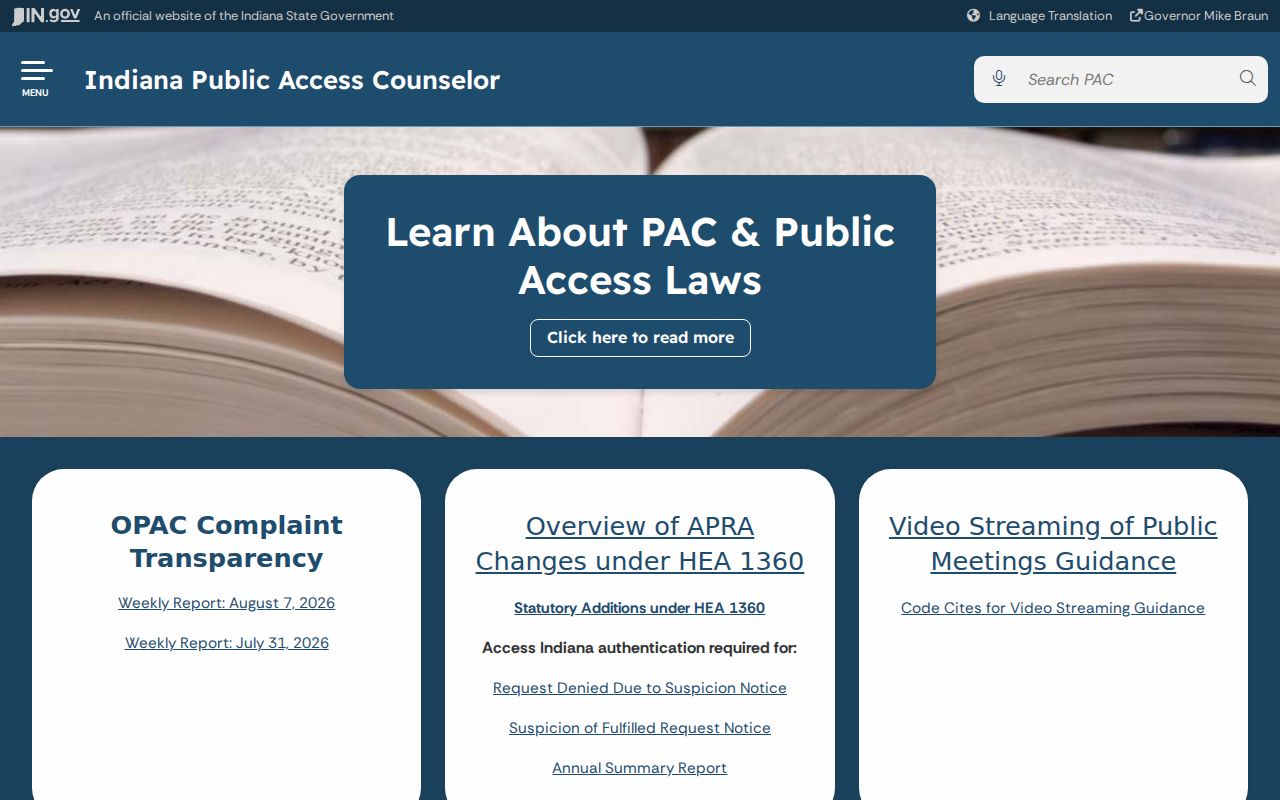
Court-file access still follows the judiciary's Access Rules, so a denial must be directed to the correct judicial or agency review channel.
For a wrong identity, preserve the search result without circulating sensitive data. Obtain the certified court disposition, then contact the clerk for a court error and ISP for a repository error. If the arresting agency used the wrong identity, that agency may also need documentation. Each office changes only the record it controls, which is why one correction request may not update every Indiana arrest or charge system.