
What Indiana Probate Divisions Cover
An Indiana probate file may administer a decedent's estate, admit a will, appoint a personal representative, resolve creditor claims, approve supervised transactions, or close an estate. Probate dockets also include guardianship and trust proceedings. The public file can reveal the court's orders and the representative's authority, but it does not necessarily show every asset. Joint ownership, payable-on-death accounts, trusts, transfer-on-death designations, and beneficiary-based insurance or retirement assets may pass outside the estate.
Most counties assign probate work by local rule to a circuit or superior court. Marion and St. Joseph have separately named statutory probate courts. This difference changes the court caption, not the local access route. The county's unified Clerk of the Circuit Court maintains the case. MyCase covers Odyssey records, while older estate books, will indexes, paper packets, or microfilm may remain at the county or may have transferred to the Archives.
Indiana distinguishes supervised estate cases, coded ES, from unsupervised estates, coded EU. Supervised administration calls for more court oversight and approval. Unsupervised administration reduces routine court involvement but still remains subject to statutes and court orders. EM marks miscellaneous estate matters, GU identifies guardianship, and TR identifies a trust proceeding. A will contest or fiduciary dispute may use another civil code, so a name search should not be limited too soon.
Indiana Probate Terms Defined
These terms help distinguish the people, property, and levels of oversight shown in an Indiana probate record.
- Testator
- A person who made a will.
- Executor or personal representative
- The person authorized by the court to administer an estate. The letters and order define that authority.
- Intestate
- Dying without a valid will, so Indiana intestacy law controls distribution of probate property.
- Letters
- The clerk-issued proof that a representative or guardian has court authority to act.
- Guardianship
- Court oversight for a guardian of a person's care, estate, or both.
- Conservatorship
- Not Indiana's main adult protective label. Indiana generally uses guardian of the person and guardian of the estate.
Search Indiana Probate Court Records
Begin with the county where the decedent was domiciled, not merely where death occurred. If needed, also consider a county where estate property was located. Search MyCase by the decedent, representative, guardian, or cause number. Narrow the court, date range, status, and probate case type. Odyssey adoption dates differ by court, so a negative online result does not rule out a legacy filing.
- Identify the domicile or other county with a valid probate venue.
- Search MyCase by party and test name variants, a broad filing period, and ES, EU, EM, GU, or TR.
- Read the chronological case summary and note the cause number, court, representative, attorneys, status, and document dates.
- Ask the county clerk for missing, legacy, or restricted-access procedures.
- Order the exact will, letters, order, accounting, claim, or closing document needed, with certification if required.
A public result can show the estate or protected person, petitioner, personal representative, attorneys, judge, hearings, claims, orders, and selected PDFs. It may omit protected identifiers and confidential evidence.
When a search fails, remove the middle name, try a former or alternate spelling, extend the date range past the year of death, and search the representative. Estates sometimes open months after death and in the domicile county rather than the place of death. Ask the clerk to check both the party index and older estate or will indexes. Give enough detail to distinguish people with similar names, but do not send protected identifiers through ordinary email.
Indiana Probate Courts and Divisions
Indiana does not place one identically named probate court in every county. Local caseload plans assign most estate and guardianship matters to a circuit or superior court probate docket. Marion Probate Court and St. Joseph Probate Court are the named exceptions. Searchers should therefore rely on the filing county and cause number rather than assume that every caption uses “Probate Court.” The Indiana Judicial Branch local court directory identifies courts and clerks statewide.
Find the local probate docket: Use the directory of all 92 Indiana counties and ask the county clerk which circuit, superior, or statutory probate court holds the file.
Indiana Probate Filing Costs
The Indiana Trial Court Fee Manual identifies statewide cost components, but no single total fits every estate or guardianship. County and case-type assessments, service, publication, claim activity, certified letters, and copy needs change the final sum. The current manual lists a $120 probate or trust base filing component before other applicable amounts. Treat it as a budget marker, not a clerk's binding quote.
The assigned Indiana trial-fee source points to the official calculation material.
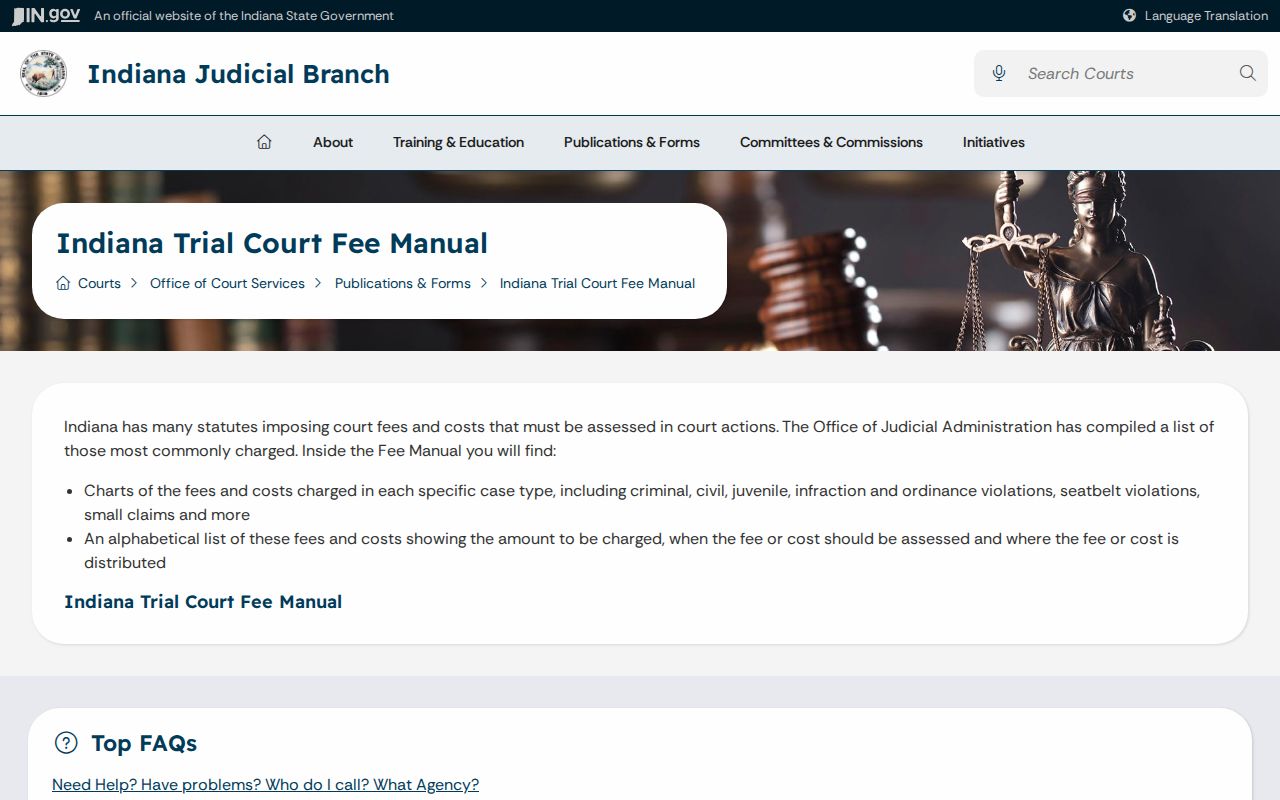
The filing clerk should calculate the current total for the exact case type and requested services.
| Item | Amount or route |
|---|---|
| Probate or trust base filing component | $120 before applicable additions |
| ES, EU, EM, GU, or TR final filing total | County quote required |
| Certified letters or document copies | County quote required |
| Sheriff service or publication | Separate variable cost |
| Indigency waiver | Verified motion available; judge decides |
What Indiana Probate Records Show
An estate packet may contain death facts, an original will and codicils, a petition, proof of the will, the appointment order, oath or bond, and letters testamentary or administration. Later filings can include creditor notice, inventory, claims, objections, sale requests, accountings, receipts, distribution papers, a closing statement, and discharge. An unsupervised estate may have fewer routine approval filings than a supervised estate. A closed status on the chronological case summary does not explain every distribution.
Read each document for its specific effect. Confirm that a will was admitted rather than merely filed, that letters remain current and unrestricted, and that a creditor claim was allowed rather than simply submitted. Compare a court order affecting real estate with the county recorder's deed because court authority and recorded title are distinct records. Inventory values cover probate assets, not necessarily the decedent's full wealth.
Indiana estate administration generally moves from filing and appointment to asset collection, creditor notice, claim review, payment, distribution, and closing. The representative may need to publish notice and serve known creditors. Publication dates and claim deadlines matter. Real estate, contested ownership, tax issues, missing heirs, or fiduciary disputes can prolong the case, so the research supports no universal completion time. Capture the first and last notice dates, objections, distribution order, and discharge instead of assuming a short docket is complete.
The Indiana State Archives describes historical vital and probate record routes in the assigned source.
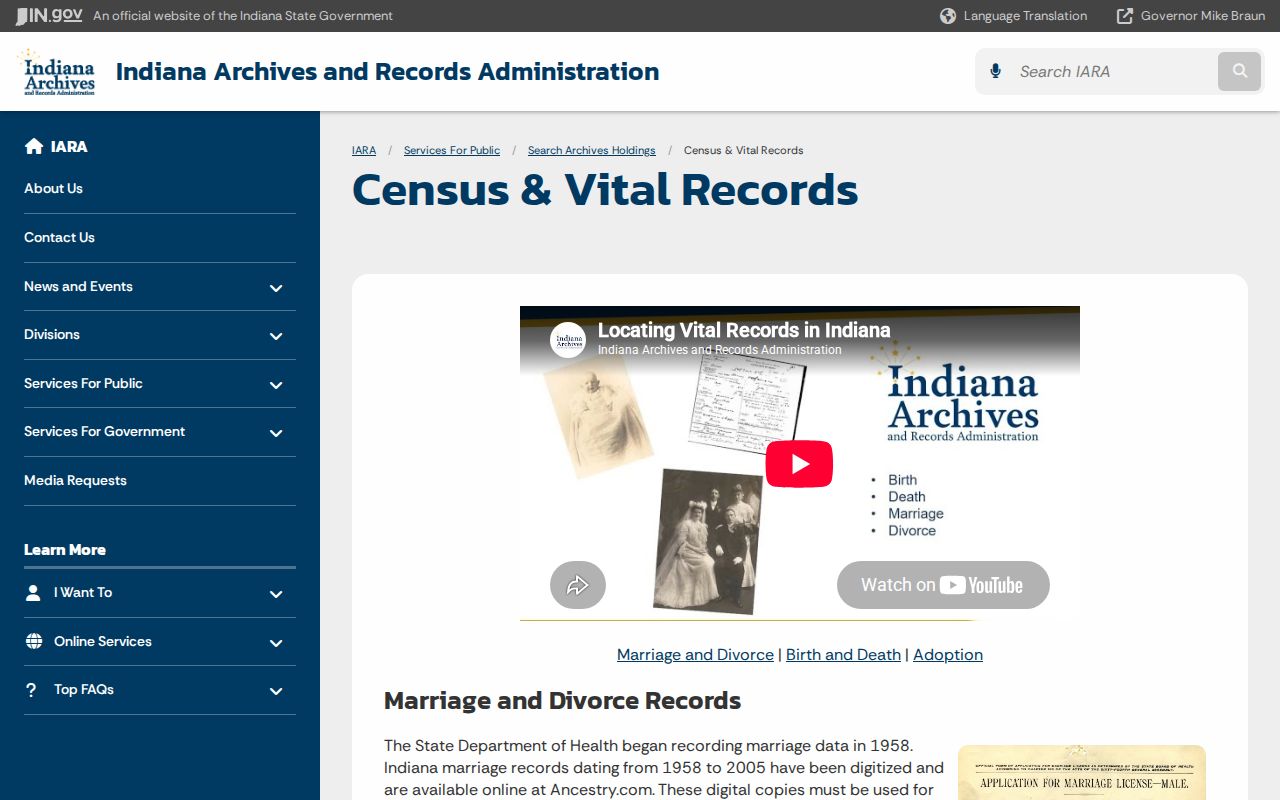
That route can help when a county transferred an older series, though transfer practices vary by record and county.
Restricted Indiana Probate Records
Indiana court access rules protect Social Security numbers, financial-account data, medical incapacity evidence, confidential inventory details, and identifying information for minors or protected persons. Guardianship orders or the existence of a case may have public components while physician reports, addresses, birth data, and financial exhibits remain restricted. A will held for safekeeping before death is not the same as a public will filed in an opened estate.
Public access depends on the document, the requester's role, and any sealing order. A nonparty should ask the clerk what is public and what motion or court authorization would be needed for restricted material. Never treat a genealogy purpose as a blanket exception. Current court records remain subject to Indiana's Rules on Access to Court Records.
Guardianship differs from estate administration after death. A guardian of the person makes personal-care decisions allowed by the order. A guardian of the estate manages property. Periodic reports and accountings can continue for years, but access to incapacity evidence and finances is limited. Inspect the appointment order and letters for the guardian's scope, restrictions, and any co-guardian requirement.
Find Indiana Probate Records by County
Choose the decedent's domicile or other valid venue and open the full Indiana county directory. Give the clerk a legal name, aliases, estimated death and filing dates, case type, and cause number if known. If MyCase returns nothing, ask for older will and estate indexes and whether the packet was transferred. A missing case can also mean property passed outside probate, a qualifying small-estate affidavit was used, spelling differs, the estate opened later, or no court filing occurred.
Indiana's small-estate process can allow qualifying personal property to transfer by affidavit after the statutory wait. Recent law commonly cites a $100,000 ceiling and a 45-day wait, but the current Indiana Code must be checked on the use date. A small-estate affidavit does not excuse debts, title requirements, disputes, or existing court orders.